

Have you ever felt the pinch of the flamenco guitar, the intensity of the jondo song or the rhythmic energy of the palms? Flamenco is an art that shakes you inside, a deep expression of the soul that is born from the earth and the history of Andalusia, but that resonates in the hearts of the whole world. Its strength lies in its authenticity, in the ability to convey pure emotions through singing, guitar and dancing.
But flamenco is much more than tradition. Its deep roots have germinated in unexpected corners of modern music, leaving an indelible mark. Far from being an art anchored only in the past, flamenco has become an inexhaustible source of inspiration, a universal language that dialogues with other styles and genres, enriching and transforming them.
In this article, we will explore how the rhythm, the melody, the voice and the elf Flamenco resonate today, demonstrating their incredible adaptability and universal relevance. We will discover what elements make flamenco so magnetic for modern musicians and how artists of various latitudes and styles have incorporated their essence into their creations. Because to really appreciate how flamenco transforms modern music, you have to feel it in its most authentic form, understand where that overwhelming force comes from.
What elements of flamenco leave a mark on modern music?
Flamenco is a complex architecture of interconnected elements. It’s not just music; It’s also dancing, it’s singing, it’s feeling. And it is precisely these components that, individually or together, have captured the imagination of musicians outside the traditional Flemish circuit.
The rhythm: the beaten heart of the compass
Perhaps the most distinctive and contagious element of flamenco is its rhythm, known as compass. It is not a simple accompaniment; the compass It is the backbone, the engine that drives music and dancing. Each flamenco stick (the different styles or variants of flamenco, such as the soleá, the bulería, the joy, etc.) has its own compass, with unique accents and rhythmic structures.
The complexity of palms (the art of percussing with hands), the bailaor or the dancer’s tack, and the incorporation of instruments such as the drawer (A percussion drum of Peruvian origin, but adopted and masterfully adapted by flamenco thanks to Paco de Lucía) they create a fascinating and nuanced polyrhythmia.
This rhythmic wealth is a treasure for modern musicians. Electronic music producers sample flamenco rhythms, jazz bands and fusion experiment with structures of compass Unusual, and world music and pop artists incorporate percussive patterns that evoke southern Spain. The energy and vitality of the flamenco rhythm are universal and lend themselves to experimentation.
Melody and harmony: sounds with their own soul
The flamenco guitar, with its characteristic sound and its virtuous technique (the plunk, the chopped, the Alzapua), is another fundamental pillar. Flemish melodies are often built on specific musical modes, such as the Phrygian mode (also known as Andalusian mode), which gives it that melancholic, deep and sometimes tense sonority so recognizable.
The MELISMAS In the cante (those extensions and ornaments in the voice on a single syllable) and the falsetas of the guitar (instrumental melodic passages between the cante or dance sections) add layers of expressiveness and virtuosity.
Jazz musicians find in the Flamingo modes new harmonic palettes to improvise. Soundtrack composers use these sonorities to evoke passion, drama or Spanish landscapes. Pop and R&B artists experiment with chord progressions or melodic lines that drink from this source, bringing an unusual emotional wealth to their compositions.
The voice: The cry of the soul in the song
The Sing Jondo (Deep Cante) is the purest and most heartbreaking vocal expression of flamenco. The Flemish voice, often rough and loaded with Quejio (That characteristic lament), seeks to convey universal emotions: pain, joy, sorrow, love, tear. It is not a ‘pretty’ vocal technique in the classical sense, but of a voice that moves by its truth and its intensity.
Singers of various genres are attracted by this authenticity and expressiveness. They seek to emulate that ability to connect directly with raw emotion. the way of phrasing, the use of silences, the power and the vulnerability that coexist in the canto They are interpretation lessons that transcend styles.
The feeling: the search for the goblin
Beyond the technical elements, flamenco has an intangible but essential component: elf. Federico García Lorca described him not as an angel or a muse, but as a mysterious force that emerges from the earth, a kind of trance or state of grace in which the artist and the public connect on a deep and transcendental level. It is the authenticity, the total delivery, the ability to move and move to the depths.
This quest for authenticity and emotional connection is an aspiration for many modern artists, tired of artificiality or superficiality. The elf Flamenco becomes an ideal, a reminder that the most powerful music is one that is born from the artist’s inner truth.
artists and genres where flamenco resonates
The influence of flamenco is not limited to a single genre or a handful of artists. It has permeated various musical scenes, sometimes obviously and sometimes more subtly.
Rosalía: the global phenomenon with flamenco roots
The clearest and most mediatic example of the influence of flamenco in modern music is, without a doubt, Rosalía. with his album the bad want (Inspired by a medieval novel, but with a deeply flamenco structure and sonority), Rosalía demonstrated how elements of current flamenco and music can be integrated to create a fresh, innovative and globally successful sound. It uses palms, melismas, singing structures, visual aesthetics and a deep respect for the roots of flamenco, although reinterpreted through the filter of pop, R&B and urban sounds. His success has opened the doors for a massive audience, who may never have approached flamenco before, discover his wealth.
Paco de Lucía: the pioneer of the fusion
One cannot speak of the influence of flamenco in other genres without mentioning Paco de Lucía. This flamenco guitar genius was one of the great promoters of fusion flamenco music. His musical curiosity led him to collaborate with world-class jazz musicians such as Al Di Meola and John McLaughlin, creating the legendary Friday Night in San Francisco. He also incorporated the electric bass and the drawer into his own flamenco music, laying the foundations for new sonorities. His legacy is immense and he showed that flamenco could dialogue as equals with any musical genre.
Other examples of fusion and dialogue
The list of artists and projects that have explored the fusion with flamenco is long and diverse:
- Ketama: Pioneers in mixing flamenco with pop and funky in the 80s and 90s.
- Sorcerer’s eyes: They fused flamenco with hip-hop, reggae and other urban rhythms with great success.
- Diego El Cigala: Known for his successful foray into the bolero, demonstrating the emotional versatility of the flamenco voice.
- Enrique Morente: a constant innovator who experimented with rock and other music in iconic works such as Omega (With Nick Lizard).
- Jazz bands and music from the world: Numerous jazz musicians (Chick Corea, Michel Camilo) and world music artists have incorporated flamenco elements into their compositions, attracted by their rhythmic and melodic richness.
These examples show that the influence of flamenco is not a fad, but a constant current of inspiration that continues to flow in modern music.
Beyond the names: Genres where flamenco resonates
The permeability of flamenco has led to the creation of new genres and subgenres, as well as the infiltration of its elements into existing styles.
Flamenco Fusion: A constantly evolving genre
As we mentioned, fusion flamenco is a genre in itself, born from experimentation. It combines flamenco structure and feeling with harmonic, rhythmic or instrumental elements of other styles such as jazz, blues, rock, pop, Latin music, reggae or electronics. It is a space of creative freedom where the roots of flamenco are intertwined with contemporary sounds.
Flamenco Jazz: Dialogue of Improvisation and Passion
Jazz and flamenco share a deep connection with improvisation and individual expression. Flamenco jazz is a vibrant subgenre where musicians from both worlds explore together, using the flamenco modes in jazz improvisations, adapting compasses Flamingos to jazz structures or fusing instrumentation.
Latin and urban music: rhythms and melodies with Andalusian flavor
The flamenco rumba, with its festive and danceable character, has had a remarkable influence on some styles of Latin music. Percussive rhythmic patterns and the use of flamenco guitar can be found in certain variants of salsa or Catalan rumba. Even in urban genres such as reggaeton or hip-hop, it is not uncommon to find samples of flamenco vocals or guitars, or rhythmic patterns reminiscent of compass.
Electronic music and World Music: Flemish textures and atmospheres
Electronic music producers have discovered in flamenco a rich source of sound textures, hypnotic rhythms and evocative atmospheres. Samples of palms, cante or guitar are integrated into electronic bases, creating unique soundscapes. inside the wide umbrella of the world music, Flamenco occupies a prominent place as one of the most influential and recognizable genres globally.
From origin to inspiration: Why is it important to know authentic flamenco?
We have seen how flamenco sneaks in and transforms modern music, how its elements travel and adapt. However, to truly understand the depth of this influence, to feel the emotional weight and complexity that modern artists seek to emulate, it is essential to go to the source.
Listening to a pop song with a flamenco palm sample is interesting, but it doesn’t compare to the experience of seeing a palmer Live, feeling the precision and strength of each hit. hear a voice that imitates the Quejio It is one thing; witness a folksinger or folksinger Delivering his soul in each note is quite another.
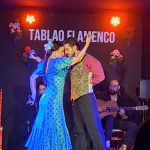
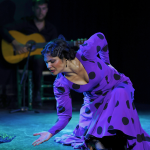
authentic flamenco, the one that is lived in a Flamenco tablaoIt is an unmatched sensory and emotional experience. It is the living interaction between the singer, the guitarist and the dancer, a constant dialogue where improvisation and elf They bloom at the moment. It is to feel the vibration of the guitar in the air, the force of the heel on the ground, the intensity of a look or a gesture. It is to understand, in the depths of being, where that strength that has inspired generations of musicians all over the world comes from.
Knowing the flamenco in its essence allows you to appreciate in greater depth the fusions and influences. It gives you the context to understand why certain rhythms or melodies are so powerful, why that voice shakes you. It is like visiting the root of a majestic tree to understand the beauty of its branches and fruits.
Flamenco, a living and global art
Flamenco, with its centuries-old history and its deep roots, far from staying in the past, has proven to be an incredibly resilient and adaptable art. Its impact on modern music is undeniable and continues to grow. From the contagious rhythms of compass Until the raw emotion of canto and the search for the elusive elf, Flamenco offers a well of inspiration for artists of all genres.
The fusion flamenco music and the integration of flamenco elements in pop, jazz, electronics and other music are testimony to its vitality and its ability to dialogue with the contemporary world. Flamenco is not just a Spanish musical genre; It is a universal language of emotion, recognized and admired at a global level.
If your curiosity has been piqued and you want to feel the true soul of flamenco that inspires so many artists, the best way is to live it live. We invite you to Flamenco Tablao Alma In the heart of Palma de Mallorca. Here you can experience the passion live, with artists who carry the elf In the veins, in an intimate and welcoming atmosphere.
Do not miss the opportunity to connect with the source of all this inspiration. View our schedule and book your ticket It’s easy and worry-free, with free cancellation up to 24 hours before, offering you a full refund if your plans change. We are waiting for you from 1 hour before the start of the show to relax and enjoy the atmosphere. The show lasts 1 hour, long enough to let you be carried away by magic. Our host will guide you in Spanish, English or German, to make you feel at home. We are a wheelchair accessible space, designed so that everyone can enjoy this unique experience. In addition, your ticket includes a drink (beer, wine, soft drink, cava or sangria) and you have the option to enjoy our food service before or after the show.
Come and find out why flamenco remains such a powerful force in today’s music. Come feel the soul!